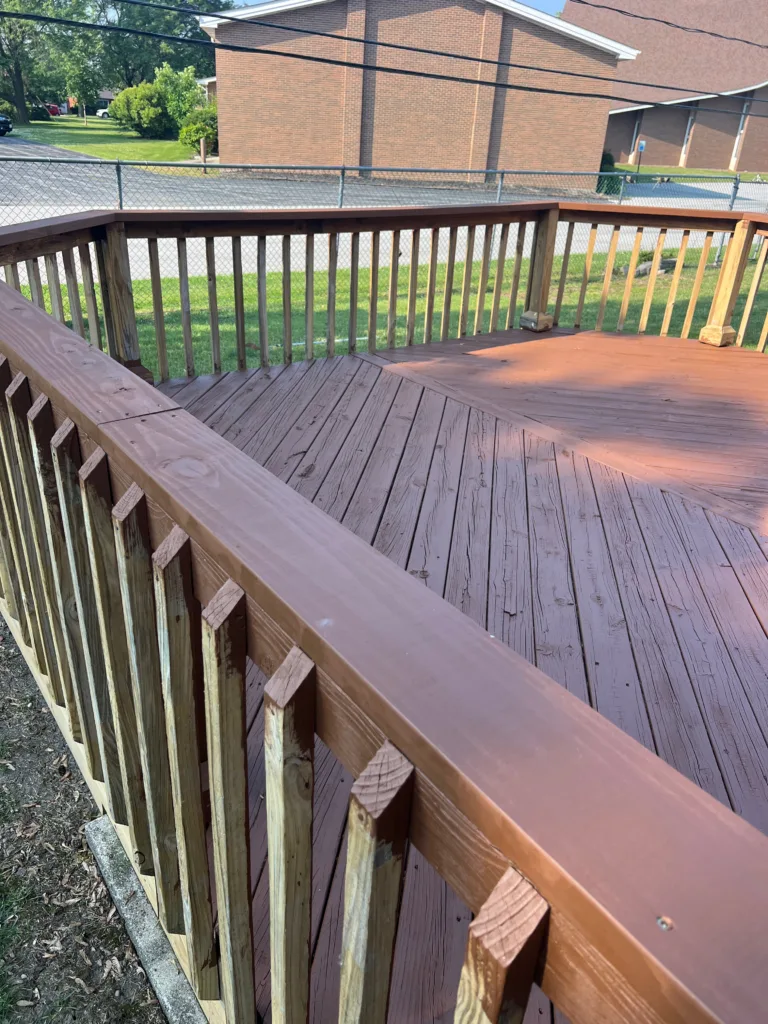
This completed wood deck restoration project in Chicago focused on bringing an old, weathered backyard deck back to a cleaner and more usable condition. The deck had years of outdoor exposure, dark surface buildup, gray and faded wood, worn railings, and areas that needed repair before stain and sealer could be applied.
The goal was not to replace the entire deck. The structure was still usable, but the surface needed serious maintenance. The project included inspection, pressure washing, damaged board repair, surface preparation, waterproofing stain and sealer application, and final cleanup. The result was a brighter, warmer, and better-protected wood deck that looked much more inviting for outdoor use.
For many homeowners, this type of deck restoration is the right middle ground between doing nothing and paying for a full deck rebuild. If the framing and main structure are still serviceable, cleaning, repairing, staining, and sealing can extend the life of the deck and improve the look of the entire backyard.
Project Overview: Wood Deck Restoration in Chicago
This residential deck restoration included power washing, surface cleaning, damaged board inspection, minor wood repair, staining, sealing, and finish cleanup. The deck was attached to a brick house and included a large walking surface, railings, top rails, steps, and perimeter balusters.
Chicago weather is hard on exterior wood. Rain, snow, ice, direct sun, humidity, and freeze-thaw cycles all wear down a deck over time. Once the protective finish breaks down, the wood starts absorbing moisture, turning gray, dark, or black in areas where water and organic buildup sit on the surface.
- Inspection of the old deck surface and railings
- Checking damaged boards, cracks, gaps, and worn areas
- Pressure washing the deck before refinishing
- Cleaning dark buildup, dirt, and weathered surface residue
- Repairing damaged or weak deck boards where needed
- Selecting exterior waterproofing stain and sealer
- Applying stain/sealer to the deck boards and railings
- Restoring a warmer wood tone
- Final cleanup and finished deck presentation
Before Restoration: A Weathered Backyard Deck
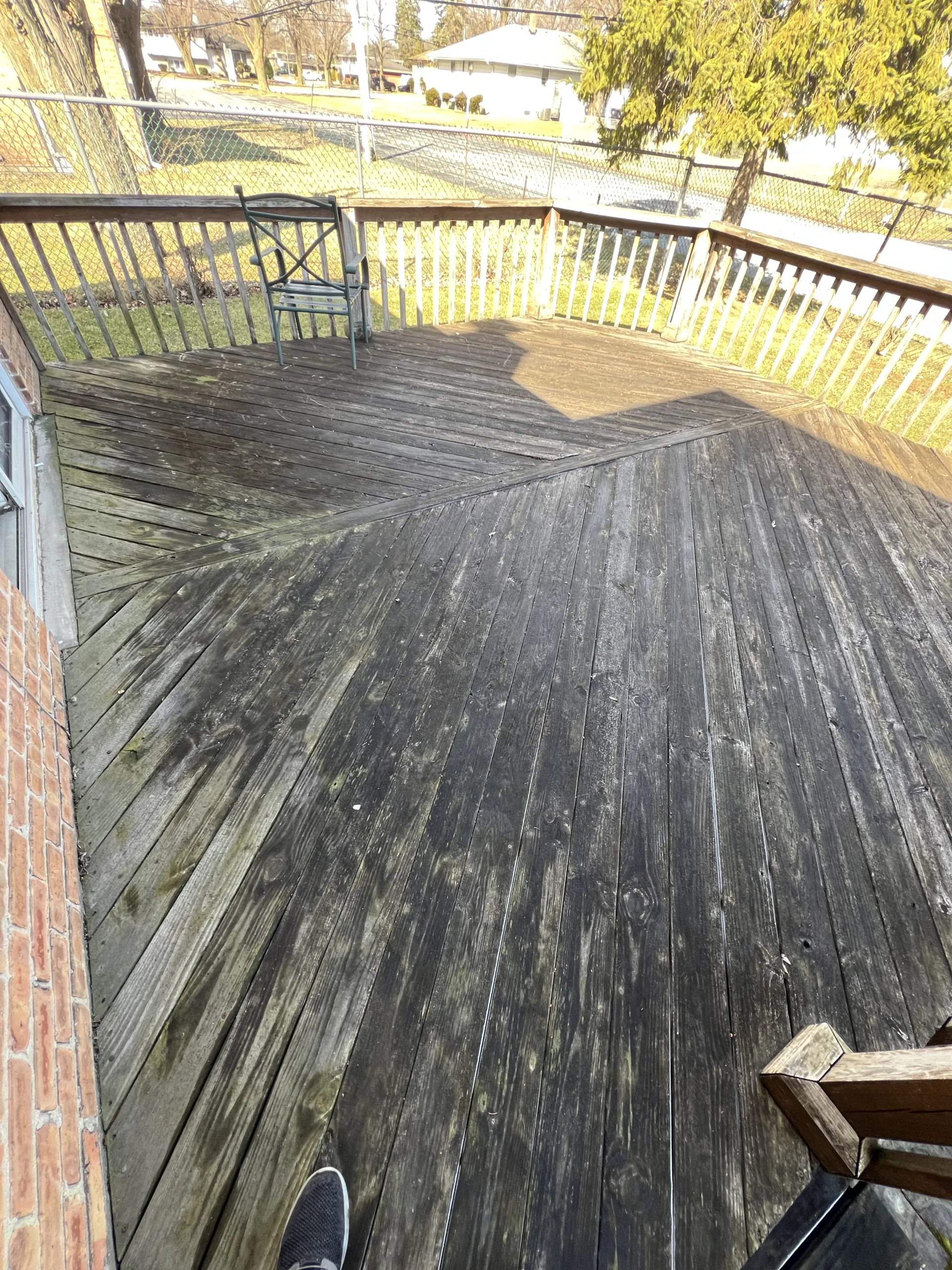
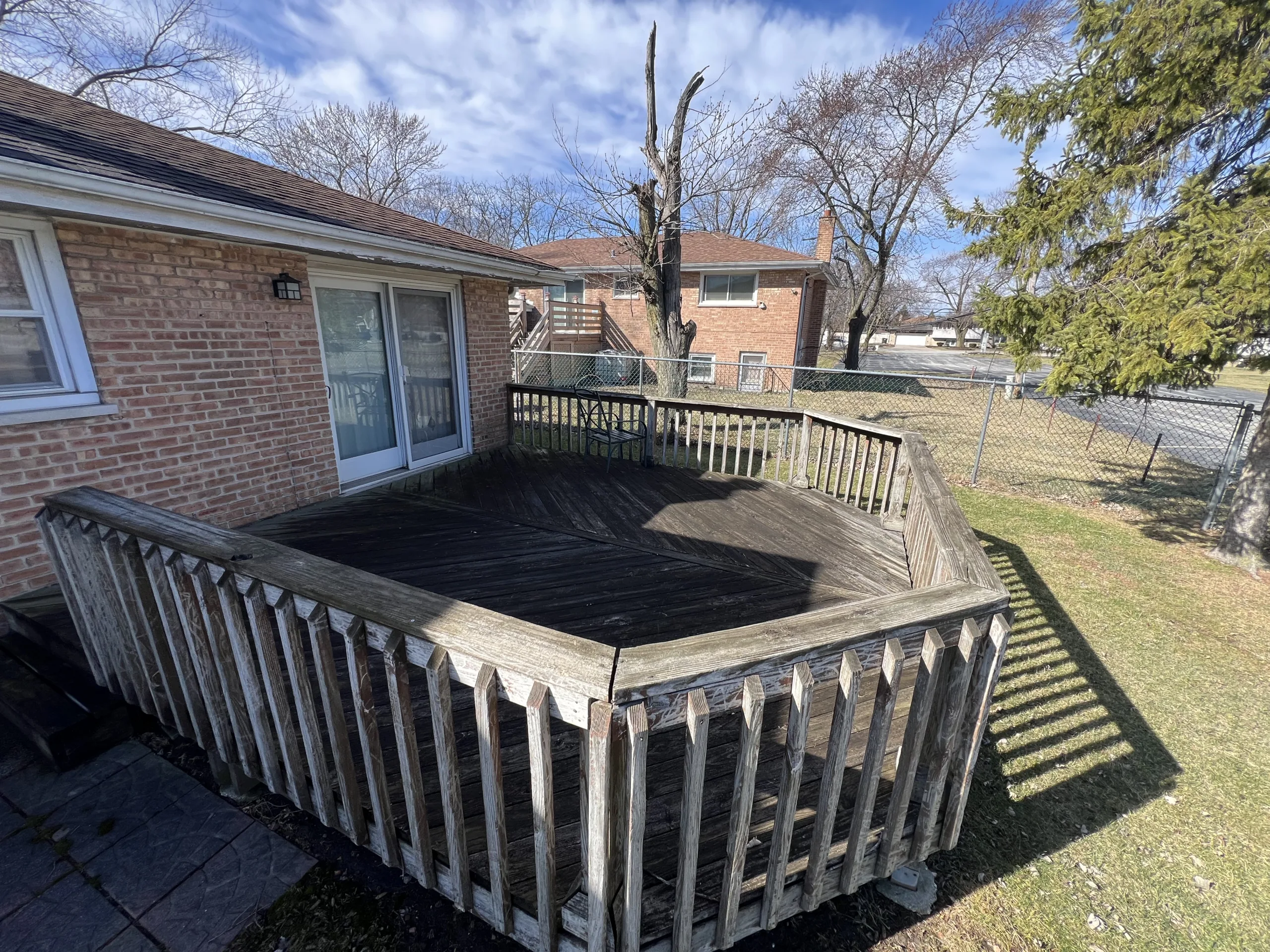
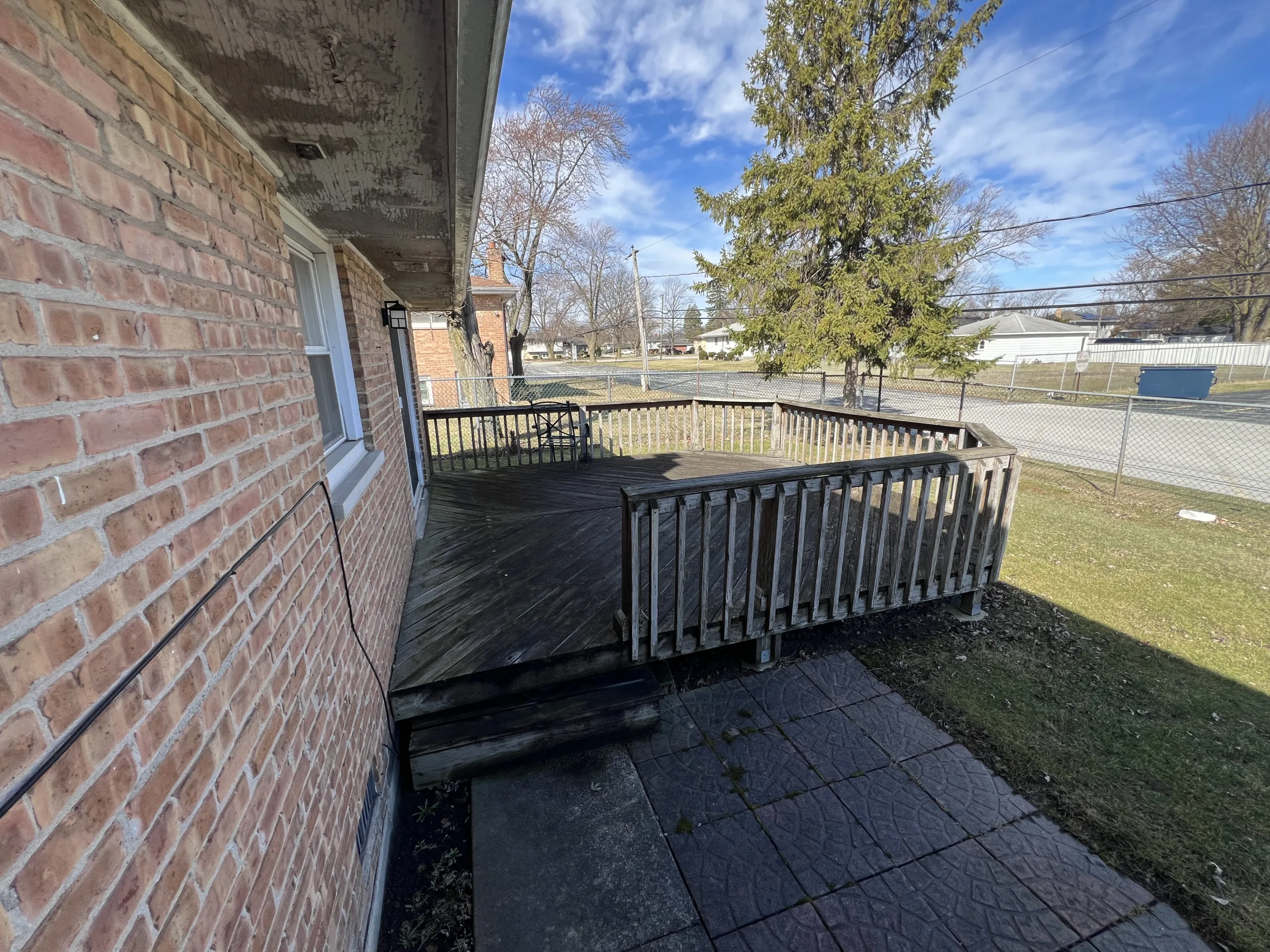
Before the work started, the deck had a dark, weathered appearance. The walking surface had blackened areas, gray wood, and visible wear across the boards. The railings and top rails were faded, dry, and uneven in color. This is common on older wood decks that have been exposed to rain, snow, sun, and moisture for several seasons without proper maintenance.
The deck was not only dirty. It had signs of finish failure. Once the old protective coating breaks down, the wood is no longer protected the way it should be. Moisture can sit in the grain, dirt builds up in cracks, and the surface starts to look darker and rougher over time.
The first step was to look at the full condition of the deck: the field boards, the diagonal board layout, railing posts, balusters, top rails, steps, and high-traffic areas near the door. A good deck restoration starts with inspection because stain should not simply be applied over damaged or dirty wood.
Why Power Washing Was Needed Before Staining
Pressure washing was an important part of this project because the old deck surface had dark buildup and weathered residue. Stain and sealer need a clean surface to work properly. If stain is applied over dirt, mildew, loose material, or oxidized wood, the final result can look uneven and may not last as long.
Deck power washing is not just about making the wood look clean for a photo. It prepares the surface for the next stage of the work. Cleaning opens up the wood surface, removes buildup, and makes damaged areas easier to see before repair and refinishing.
The pressure washing had to be done carefully. Too much pressure can damage wood fibers, raise the grain, or leave streak marks. The goal was to clean the deck enough for staining and sealing without cutting into the boards or creating new surface damage.
Step 1: Deck Inspection and Board Repair Planning
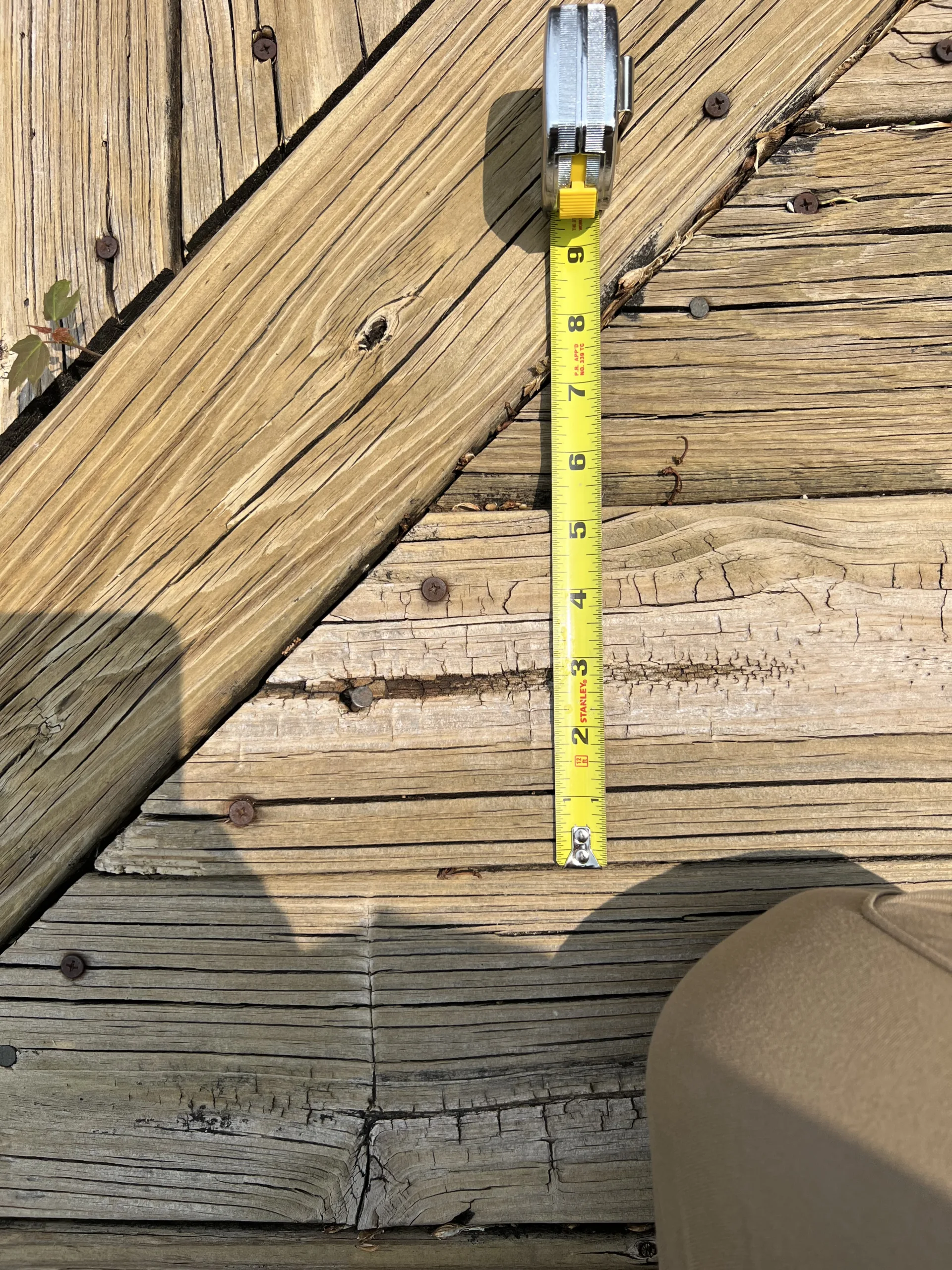
Before cleaning and staining, the damaged areas were checked closely. Some deck boards had cracks, surface checking, loose fasteners, and worn sections that needed attention. The measuring photo shows the inspection stage where damaged board areas were checked before repair and refinishing.
This step matters because a stained deck can still be unsafe if the underlying boards are weak or badly damaged. Staining improves appearance and protection, but it does not fix cracked, loose, or rotted boards by itself. Any board that is too damaged should be repaired or replaced before the final finish goes on.
On this project, the repair was focused on practical deck maintenance. The goal was to address visible damaged areas, prepare the deck for cleaning, and make sure the surface was ready for stain and sealer.
Step 2: Pressure Washing the Deck Surface and Railings
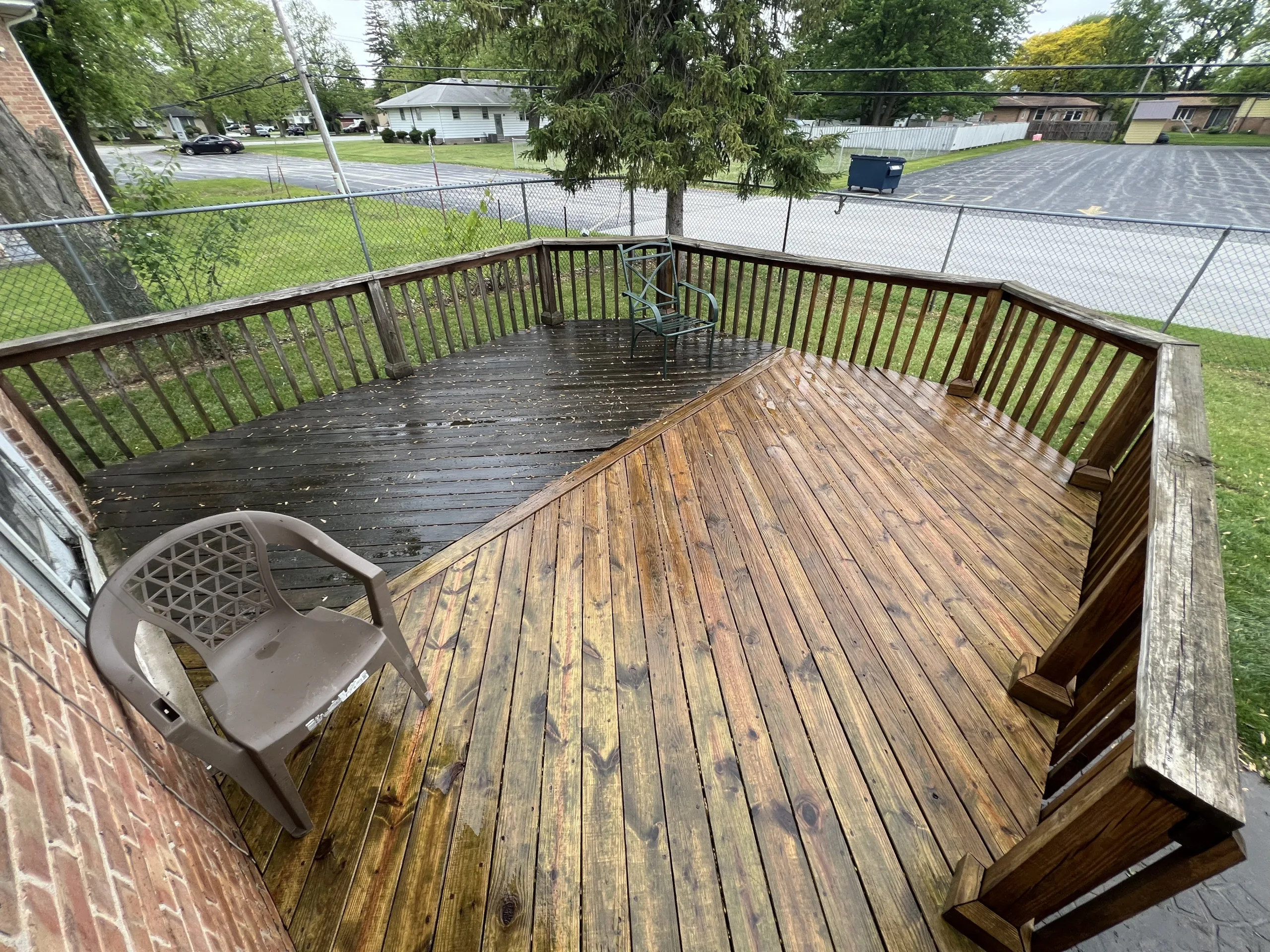
After the inspection, the deck was pressure washed to remove dirt, grime, dark buildup, and weathered surface material. This included the walking surface, railings, top rails, steps, and visible wood around the deck perimeter.
Pressure washing helps reveal the real condition of the wood. On an old deck, the surface can look almost black in some areas before cleaning. After washing, the wood grain and board condition become easier to see. This makes it possible to decide where additional preparation or repair is needed before applying stain.
The cleaning process also helps the stain absorb more evenly. If one area is clean and another area still has buildup, the stain can dry unevenly or look blotchy. Proper preparation is one of the most important parts of a good deck staining job.
Step 3: Choosing Waterproofing Stain and Sealer
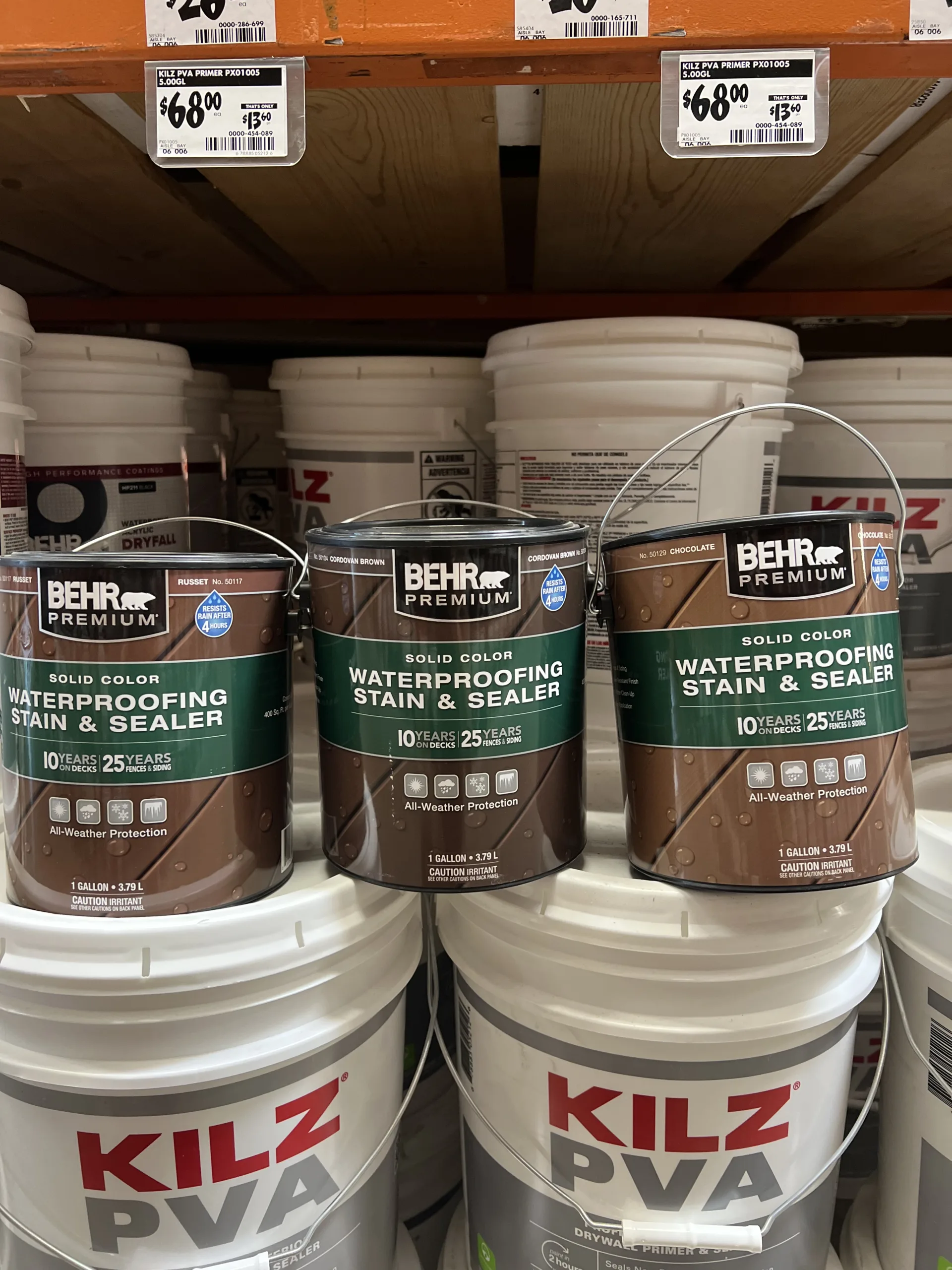
After the deck was cleaned and prepared, the next step was selecting the right exterior stain and sealer. For this project, an exterior waterproofing stain and sealer was used to refresh the wood color and help protect the surface from future moisture and weather exposure.
Choosing the right stain matters because different products create different results. A clear sealer mainly protects the wood while showing the existing grain. A semi-transparent stain adds color while still showing some natural wood character. A solid color stain provides more coverage and can help hide older uneven surfaces.
On an older deck with visible weathering, a waterproofing stain and sealer is often a practical choice because it improves appearance and adds protection in one system. It helps the deck look better while also reducing water absorption into the wood.
Step 4: Staining and Sealing the Deck
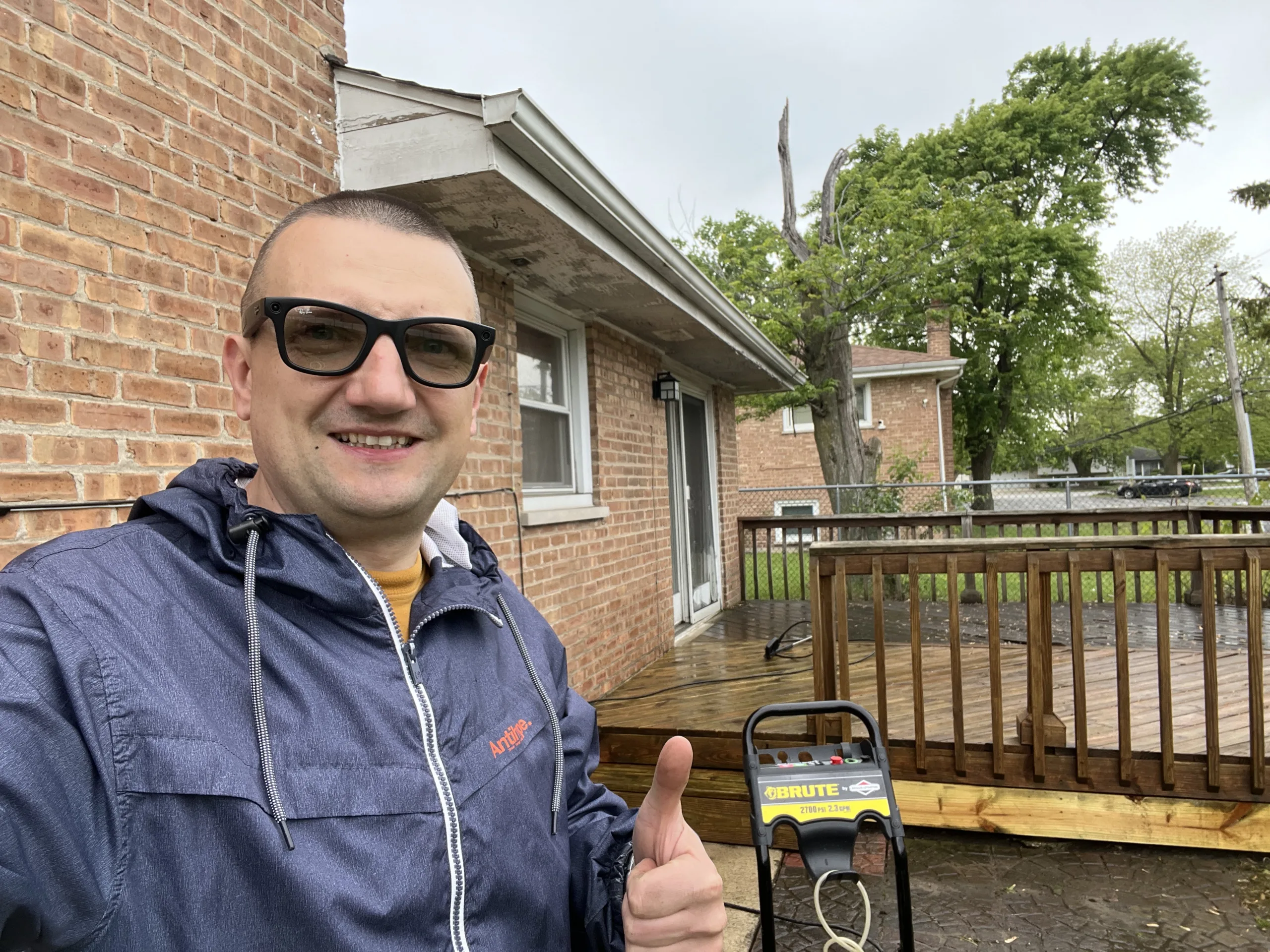
The stain and sealer were applied after the deck had been cleaned and prepared. This stage changed the appearance of the deck dramatically. The old dark, gray surface began to show a warmer wood tone, and the deck started to look maintained again instead of neglected.
The in-progress photo shows the contrast between the darker old surface and the cleaned/refinished area. This is one of the clearest ways to see the value of deck restoration. The work does not just add color; it removes years of buildup, refreshes the wood, and adds a protective finish.
Staining a deck requires attention to coverage, direction, and transitions. Large flat areas need even application. Railings, edges, posts, corners, and steps need detail work. Missed edges or thin spots can allow moisture to get into the wood faster, so the finish must be applied carefully across the entire surface.
Step 5: Finished Deck Surface and Railings
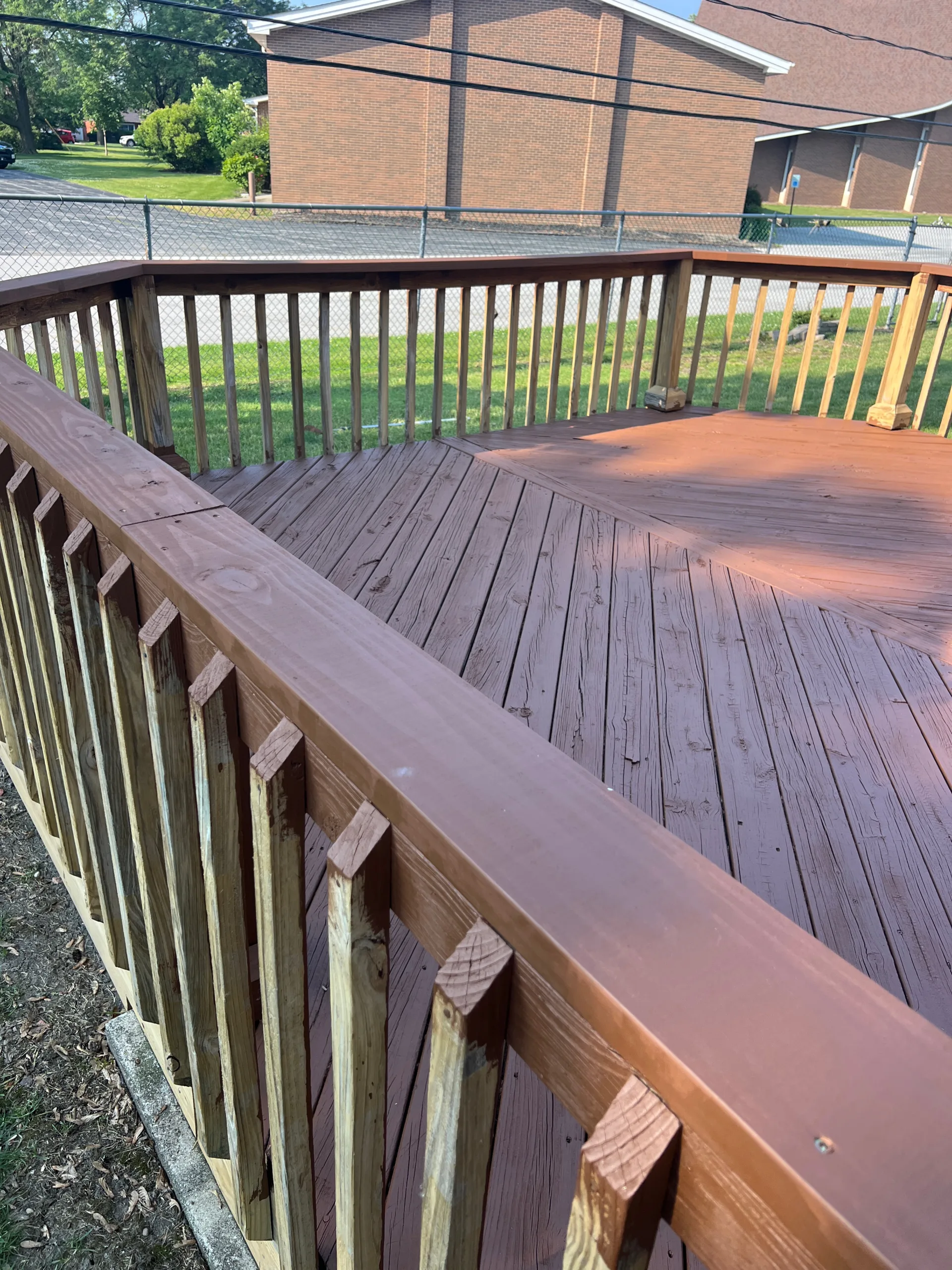
After the staining and sealing work was complete, the deck had a much cleaner and warmer appearance. The dark buildup was gone, the surface looked refreshed, and the railings had a more consistent finish. The deck once again looked like an outdoor living space instead of an aged, weathered platform.
The finished result shows why pressure washing, repair, staining, and sealing should be treated as one process. Power washing cleaned the wood. Repair addressed damaged areas. Stain restored the color. Sealer helped protect the deck from future moisture and weather exposure.
This type of restoration is especially useful when the deck is still structurally usable but looks worn out. It can improve curb appeal, make the backyard feel cleaner, and help extend the life of the wood before a larger rebuild becomes necessary.
Why Deck Staining and Sealing Matters
Wood decks need protection. Without stain or sealer, exterior wood absorbs moisture more easily, dries out in the sun, and becomes more vulnerable to cracking, splitting, mildew, and rot. A deck may still feel solid for a while, but the surface will continue to deteriorate if it is left unprotected.
Staining and sealing help protect the deck from several common problems:
- Moisture absorption after rain and snow
- UV damage from direct sunlight
- Gray and faded wood color
- Surface cracking and checking
- Mildew, algae, and dark buildup
- Peeling or failing old finish
- Premature board deterioration
- Splinters and rough walking surfaces
Deck maintenance is not only about appearance. A clean and sealed deck is easier to inspect, easier to maintain, and less likely to hide moisture-related damage under layers of dirt and old buildup.
Deck Restoration vs. Full Deck Replacement
Not every old deck needs to be replaced. If the deck frame, posts, beams, and major structure are still serviceable, restoration may be a better first step. Power washing, minor repair, staining, and sealing can make a major difference without removing the entire deck.
A full deck replacement may be necessary if the structure is unsafe, the framing is rotted, railings are loose, or the boards are too damaged across most of the surface. But when the main problem is weathering, surface buildup, failing finish, or several damaged areas, a restoration project can be the practical option.
For this project, restoration made sense because the deck could be cleaned, repaired, and refinished without tearing out the entire structure.
Deck Power Washing, Repair, Staining, and Sealing in Chicago
Chicago decks deal with heavy seasonal wear. Snow, rain, ice, humidity, and summer sun all affect exterior wood. If a deck is not cleaned and sealed regularly, the finish breaks down and the boards start to look gray, dark, and weathered.
A focused deck restoration can improve both appearance and protection. The process starts with inspection, continues with cleaning and repair, and finishes with stain and sealer. That order matters because a good finish depends on proper preparation.
Evo Service provides deck power washing, deck repair, deck staining, deck sealing, exterior wood repair, and backyard deck restoration services in Chicago and nearby suburbs. If your deck is dark, gray, slippery, faded, cracked, or showing signs of weather damage, we can inspect the surface and recommend whether restoration or replacement makes more sense.
FAQ: Deck Power Washing, Staining, and Sealing
Can an old wood deck be restored instead of replaced?
Yes. If the main structure is still serviceable, an old wood deck can often be restored with pressure washing, minor repair, staining, and sealing. Full replacement is usually needed only when the frame, posts, railings, or most of the boards are badly deteriorated.
Should a deck be pressure washed before staining?
In many cases, yes. Pressure washing removes dirt, buildup, mildew, and weathered residue so the stain can absorb more evenly. The pressure must be controlled carefully to avoid damaging the wood.
What is the difference between deck stain and deck sealer?
Deck stain adds color and can help protect against UV damage. Deck sealer focuses on moisture protection. Many modern exterior deck products combine stain and sealer in one system.
How do I know if my deck needs repair before staining?
Your deck may need repair if boards are cracked, soft, loose, splintering, rotted, or pulling away from fasteners. Damaged boards should be repaired before stain and sealer are applied.
How often should a wood deck be stained and sealed?
The schedule depends on sun exposure, moisture, foot traffic, product type, and wood condition. Many wood decks need maintenance every few years, especially when the finish fades, water stops beading, or the surface starts to turn gray or dark.
Do you provide deck restoration in Chicago?
Yes. Evo Service provides deck power washing, wood deck repair, deck staining, deck sealing, and exterior wood restoration services in Chicago and nearby suburbs.