Need framing or drywall work?
Text photos of the wall, ceiling, framing, drywall damage, partition area, restaurant counter, office space, or repair location. We can review the visible scope before scheduling.
Framing and Drywall Services in Chicago
EVO Home Repair provides framing and drywall services for small and mid-size projects in Chicago homes, apartments, condos, rental units, offices, restaurants, cafes, retail spaces, and commercial interiors. The work may involve new partition framing, metal studs, wood framing, drywall hanging, taping, mudding, sanding, patching, wall repair, ceiling repair, or drywall finishing before painting. Most drywall and framing pages online are generic. This page is different because it is built around real photo examples: restaurant counter framing, finished wall panels, metal stud partition framing, new commercial drywall, ceiling framing after drop ceiling removal, and drywall ceiling taping and mudding.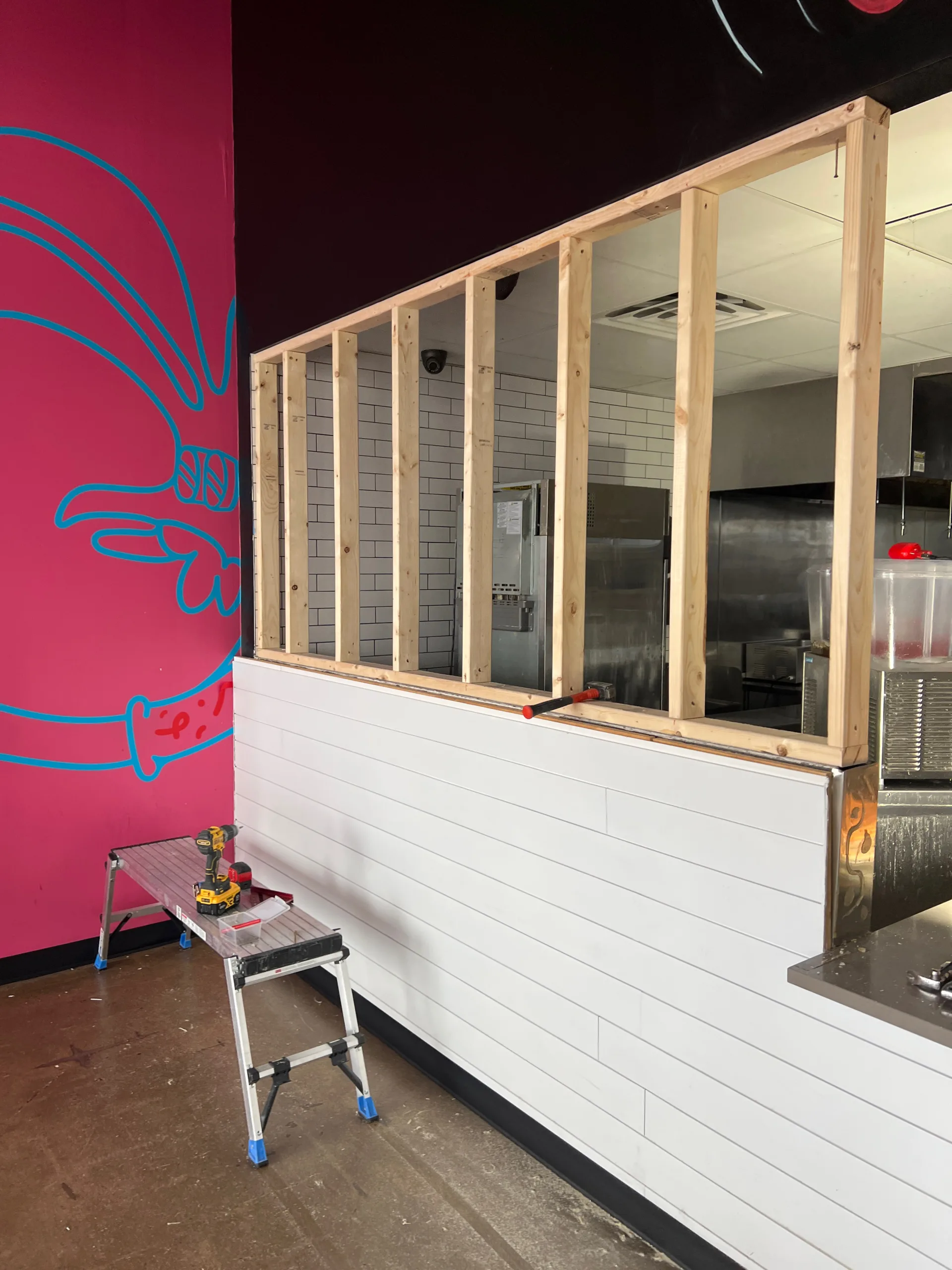
Framing and Drywall Work We Handle
Our framing and drywall work is focused on practical wall and ceiling repairs, build-outs, and finishing needs. This includes residential repairs, rental property work, office repairs, restaurant remodeling, small commercial build-outs, and property maintenance punch-list items.- Interior wall framing
- Metal stud partition wall framing
- Wood framing for small interior build-outs
- Restaurant counter and service-area framing
- Office partition wall framing
- Drywall installation and drywall hanging
- Drywall repair and drywall patching
- Ceiling drywall installation
- Ceiling drywall repair
- Drywall taping and mudding
- Drywall finishing before painting
- Drywall seam repair and tape repair
- Wall repair after demolition, layout changes, or damage
- Commercial drywall repair for restaurants, offices, cafes, and small businesses
- Apartment turnover drywall repairs
- Property management drywall punch-list work
Interior Framing for Walls, Partitions, and Small Build-Outs
Framing creates the structure for a new wall, partition, soffit, counter enclosure, ceiling section, or interior build-out. In residential spaces, this may involve wood framing for small room changes, wall repairs, ceiling work, or utility areas. In commercial spaces, metal stud framing is common for partition walls, restaurant remodels, office layouts, and retail interiors. Before framing starts, the visible layout, opening size, wall height, ceiling condition, floor condition, and connection points need to be understood. Photos and measurements help define the scope before materials are planned.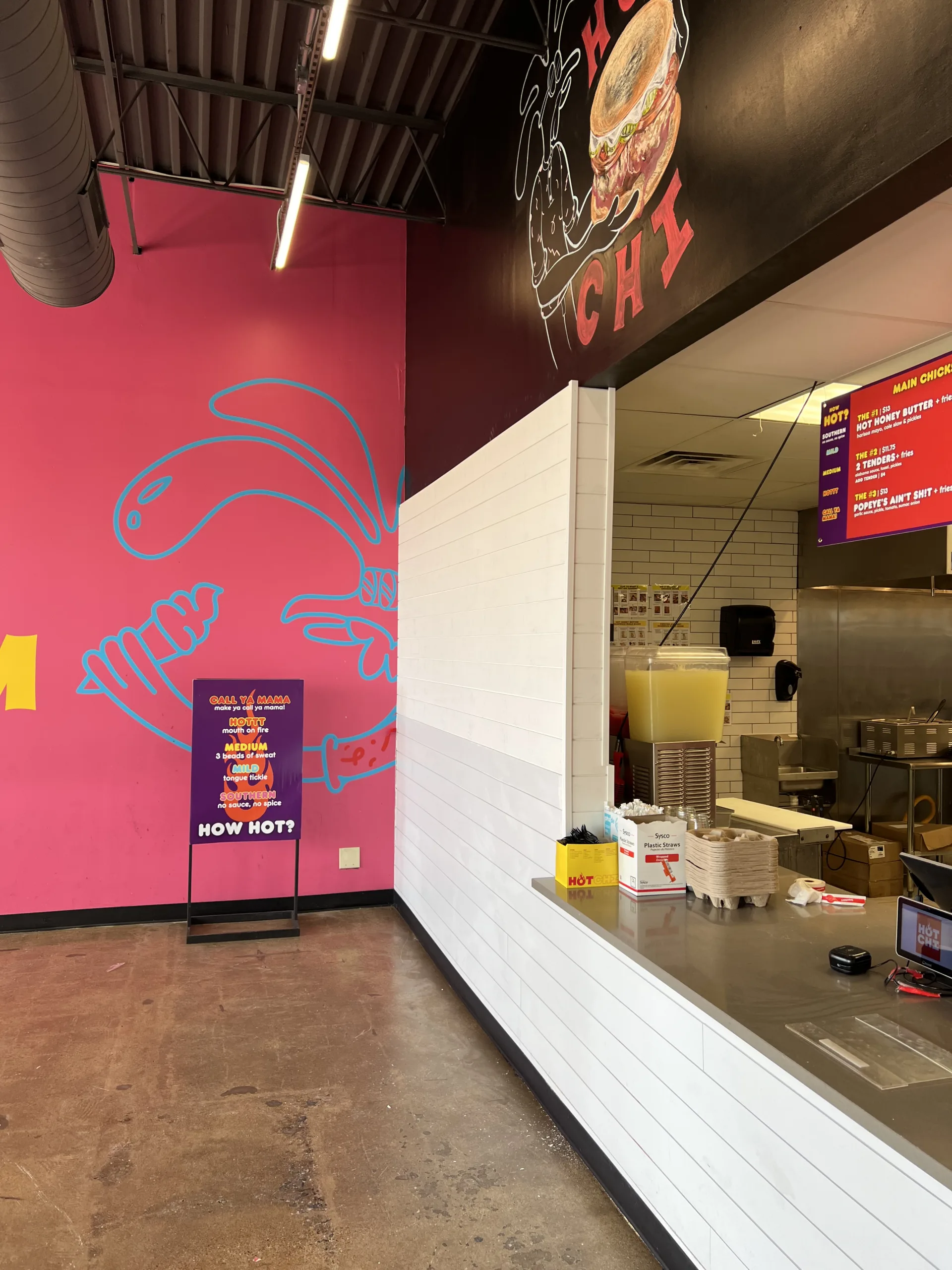
Metal Stud Framing for Commercial Spaces
Metal stud framing is commonly used in commercial interiors because it is straight, clean, and practical for long partition walls. It is often used in restaurants, offices, retail spaces, cafes, tenant improvements, and small commercial remodels where a new wall or partition is needed before drywall installation. The photo below shows a long metal stud partition wall in a commercial interior. This type of work is useful when a space needs to be divided, rebuilt, closed off, or prepared for new drywall and finishing.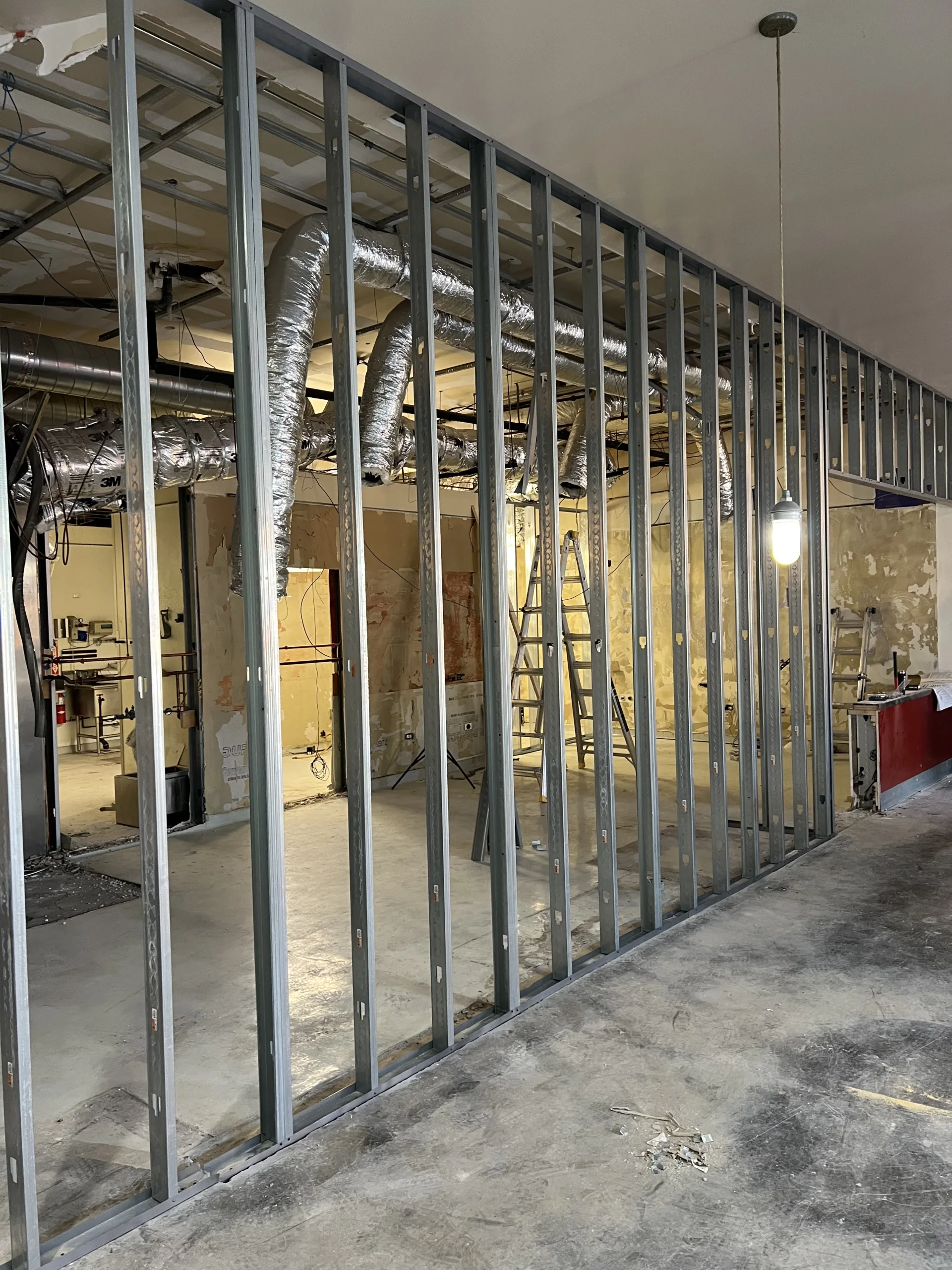
Drywall Installation After Framing
After framing is completed, drywall creates the finished wall or ceiling surface. Drywall installation may include hanging drywall sheets, cutting around openings, fastening panels, setting corner areas, preparing seams, and getting the surface ready for taping and mudding. Drywall installation is common after new partition framing, wall layout changes, ceiling repairs, commercial build-outs, restaurant remodeling, office renovation, and damaged wall replacement.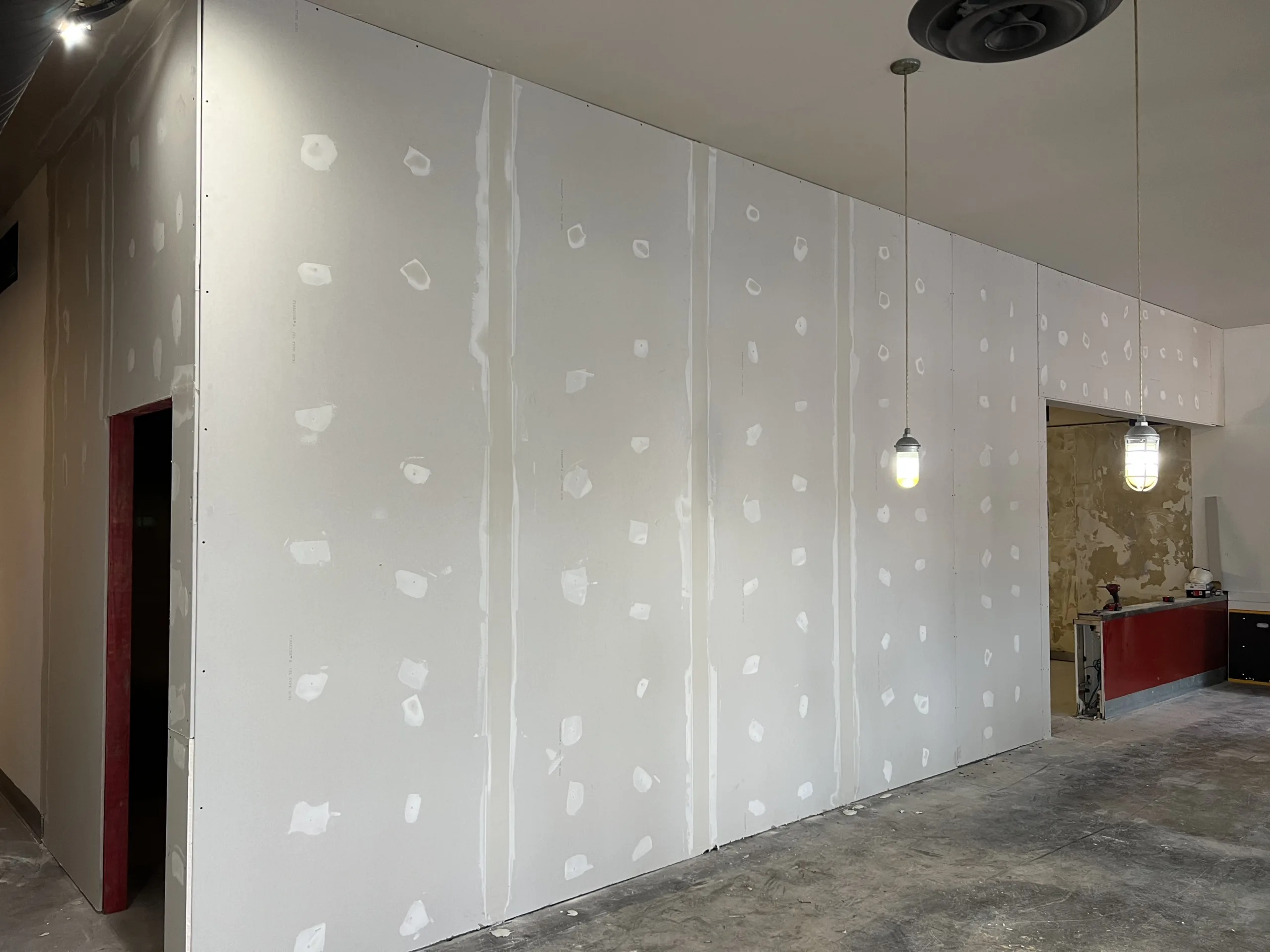
Ceiling Framing and Ceiling Drywall
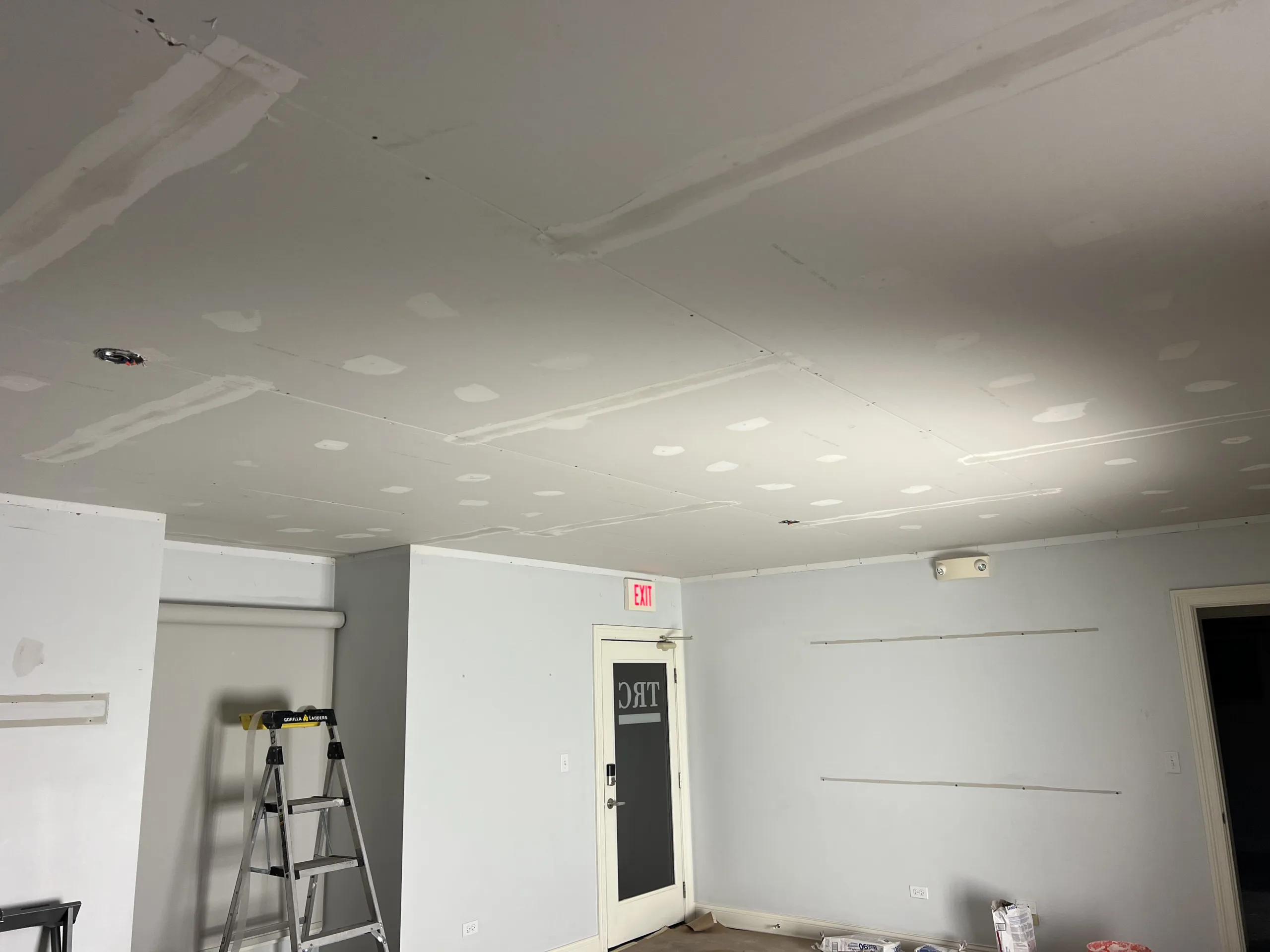
Ceiling drywall work is often needed after a drop ceiling is removed, after old ceiling material is damaged, or when a room needs a cleaner finished ceiling. This may include preparing ceiling framing, installing drywall sheets, fastening the panels, taping seams, mudding fasteners, and preparing the ceiling for sanding and paint. The photos below show ceiling framing after removal work and a new drywall ceiling during the taping and mudding stage. This is useful for offices, small commercial spaces, basements, utility rooms, and interior remodels where the ceiling needs to be rebuilt or cleaned up.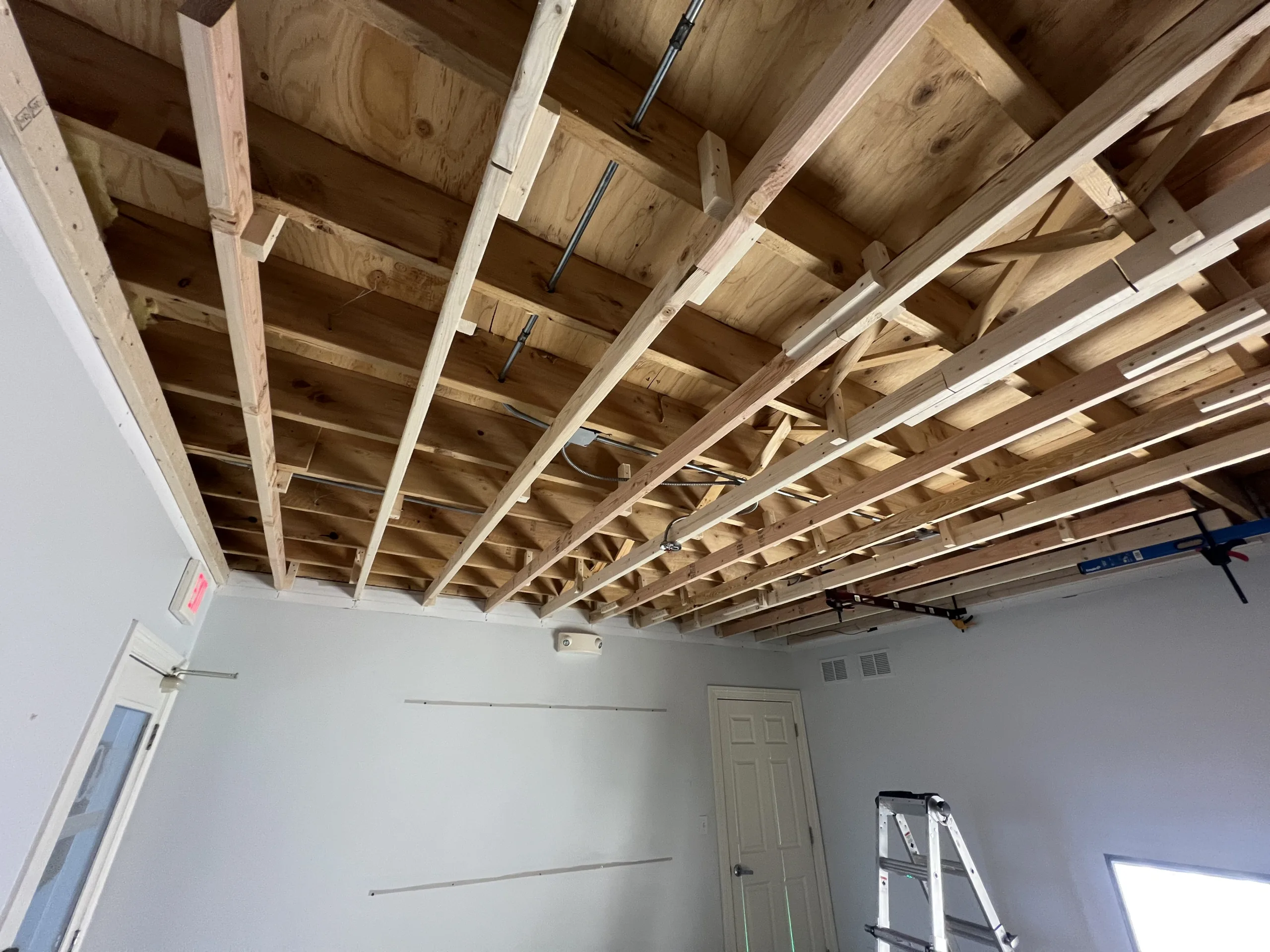
Drywall Repair, Patching, Taping, and Mudding
Drywall repair can be small or large. Some jobs are simple wall patches. Others involve ceiling drywall repair, drywall seam repair, tape repair, corner bead work, crack repair, drywall damage repair, or patching after demolition, plumbing access, electrical work, tenant damage, shelving removal, or layout changes. For a clean finish, drywall repair usually needs more than just covering a hole. The damaged area may need to be cut cleanly, backed properly, patched, taped, mudded in several passes, sanded, primed, and prepared for paint. The goal is a flat and stable surface that does not draw attention after painting.- Drywall hole repair
- Wall patching
- Ceiling patch repair
- Drywall seam repair
- Drywall tape repair
- Drywall crack repair
- Drywall corner repair
- Drywall repair before painting
- Drywall repair after minor demolition or access work
- Commercial drywall repair for restaurants and offices
- Apartment and rental turnover drywall repair
Send photos before scheduling
For drywall and framing work, send one close-up photo and one wide photo of the wall, ceiling, partition, damaged area, or commercial space. Add measurements if you have them.
Commercial Drywall and Framing for Restaurants, Offices, and Small Businesses
Commercial drywall and framing work often needs a practical approach: clear layout, clean work stages, and a finished surface that works for daily business use. EVO Home Repair helps with small commercial drywall and framing projects for restaurants, cafes, offices, retail spaces, and property managers. Common commercial requests include partition walls, service counter framing, wall rebuilds after demolition, drywall installation over new framing, ceiling drywall repair, drywall finishing before painting, and punch-list repairs before opening or reopening a space.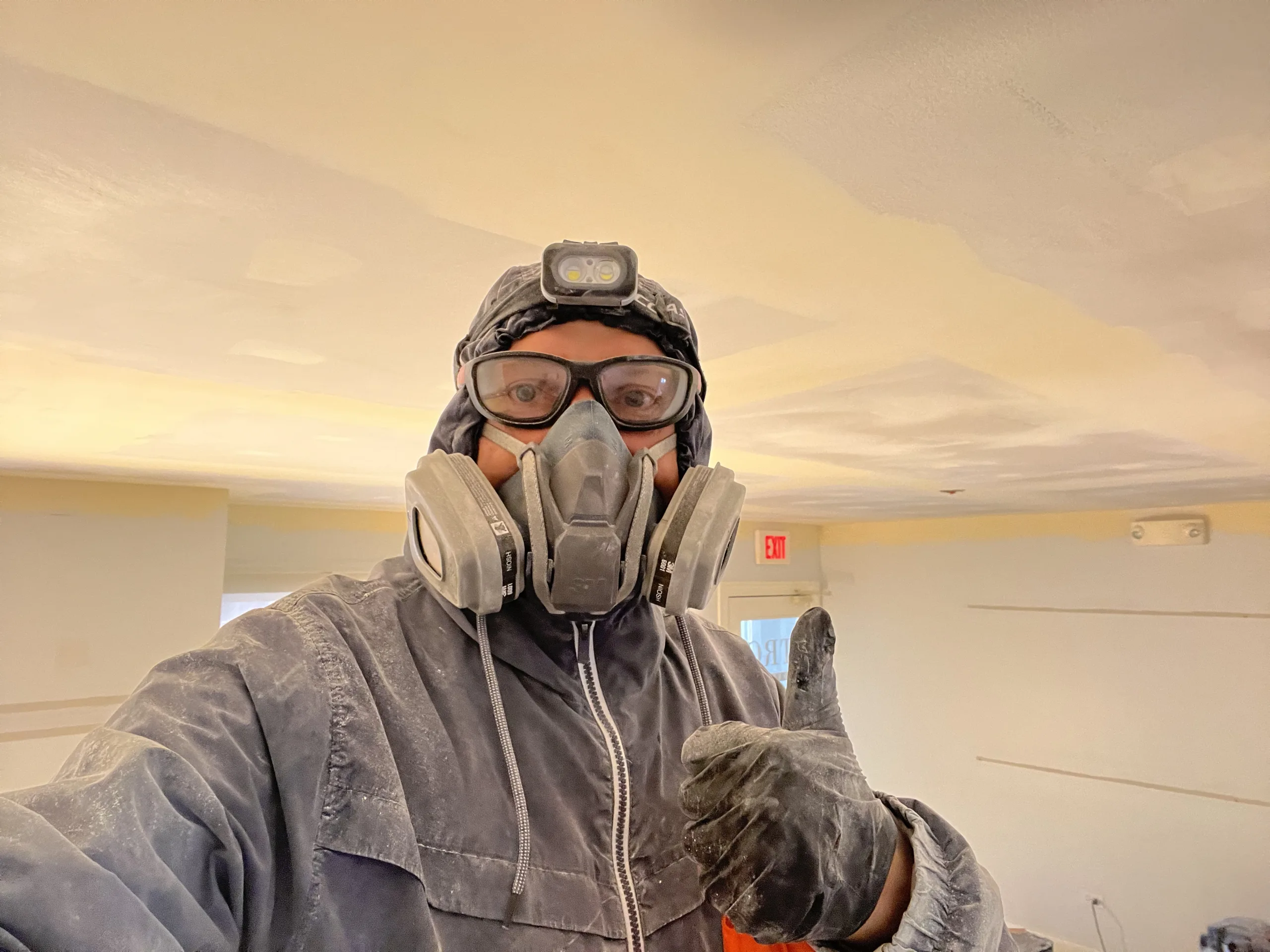
Residential Drywall and Ceiling Repairs
Residential drywall work is common in homes, condos, apartments, basements, garages, bedrooms, bathrooms, kitchens, hallways, and rental units. Small drywall repairs can come from water access, old anchors, moving damage, door impact, removed shelves, cracks, ceiling damage, or renovation work. For homeowners and landlords, drywall repair is often part of a larger punch list: patch the wall, repair the ceiling, fix the seam, prepare the surface, and get the area ready for primer and paint.How Our Framing and Drywall Service Works
1. Send Photos and Measurements
Send photos of the wall, ceiling, opening, damaged drywall, framing area, commercial space, or partition location. Include approximate height, width, and length when possible. For ceiling work, include photos from multiple angles.2. Describe the Scope
Tell us whether the job is framing, drywall installation, drywall repair, ceiling drywall, patching, taping, mudding, sanding, or preparation for painting. For commercial spaces, explain whether the area is a restaurant, cafe, office, retail space, or rental unit.3. We Review the Visible Conditions
We review the photos for visible framing, surface condition, access, ceiling height, wall length, damage size, material type, openings, edges, seams, and nearby fixtures. This helps determine whether the work is a small repair, a drywall installation, a ceiling repair, or a larger framing and finishing scope.4. Framing, Drywall, or Repair Work
Depending on the project, work may include framing the wall or ceiling area, installing drywall sheets, cutting around openings, fastening panels, taping seams, applying joint compound, sanding, and preparing the area for primer and paint.5. Clean Surface Preparation
The goal is a clean, stable surface. For visible walls and ceilings, the finishing stage matters: seams should be blended, fasteners covered, corners prepared, and the surface made ready for the next finish step.Who This Service Is For
This framing and drywall service is useful for homeowners updating a room, landlords repairing rental units, property managers handling punch-list items, HOAs maintaining shared areas, restaurants rebuilding service areas, offices changing layouts, and small businesses repairing walls or ceilings after renovation work.- Homeowners needing wall repair, ceiling repair, or drywall patching
- Landlords preparing rental units between tenants
- Property managers handling drywall punch-list repairs
- Restaurants and cafes building or repairing interior partitions
- Small businesses updating offices, counters, service areas, or walls
- Retail spaces needing commercial drywall repair or partition framing
- Condo owners and HOAs needing practical wall and ceiling repairs
Chicago Service Area
EVO Home Repair serves Chicago and nearby areas within an approximately 15-mile service area. Framing and drywall requests commonly come from homeowners, landlords, property managers, restaurants, offices, cafes, retail spaces, condos, and small commercial properties across Chicago neighborhoods and nearby suburbs. Service area examples include Avondale, Irving Park, Portage Park, Jefferson Park, Logan Square, Albany Park, Lincoln Square, Lakeview, Lincoln Park, West Town, Wicker Park, Bucktown, Ukrainian Village, Uptown, Edgewater, Rogers Park, North Center, Ravenswood, Roscoe Village, Norridge, Harwood Heights, Park Ridge, Skokie, Lincolnwood, Morton Grove, Evanston, Oak Park, Elmwood Park, River Forest, Forest Park, and nearby areas.When Additional Review May Be Needed
Some framing and drywall jobs need more review before scheduling. This can happen when photos show load-bearing walls, structural movement, sagging ceiling framing, fire-rated wall assemblies, severe water damage, suspected hidden mold, unusual commercial requirements, building-management restrictions, or a scope that may involve more than visible wall and ceiling work. For these situations, send more photos, measurements, and a short explanation of what changed, what was removed, what is damaged, and what final result you need. This helps define the correct scope before work begins.Related Services
- Handyman Services in Chicago
- Drywall Repair in Chicago
- Interior Painting and Wall Repair in Chicago
- Carpentry Handyman Services in Chicago
- Door Repair and Installation in Chicago
- Property Maintenance Handyman Services in Chicago
- Restaurant Handyman Services in Chicago
- Contact EVO Home Repair
Frequently Asked Questions
Do you handle drywall repair in Chicago?
Yes. We help with drywall repair, drywall patching, wall repair, ceiling drywall repair, seam repair, tape repair, crack repair, and drywall finishing before painting. Send photos of the damaged area and the full wall or ceiling before scheduling.Do you install new drywall after framing?
Yes. We install drywall over prepared framing for walls, ceilings, partitions, small build-outs, and commercial interiors. Photos and measurements help confirm the visible scope before the work is scheduled.Can you build metal stud partition walls?
Yes. We help with metal stud partition framing for commercial spaces such as restaurants, offices, cafes, retail interiors, and small business layouts. Send photos of the space, approximate wall length, height, and the area where the partition should go.Do you repair drywall ceilings?
Yes. We help with ceiling drywall repair, ceiling patching, new ceiling drywall installation, taping, mudding, and finishing. Ceiling work usually needs wider photos from several angles so the full area can be reviewed.Can you do commercial drywall repair for restaurants or offices?
Yes. We help restaurants, offices, cafes, retail spaces, and small commercial properties with partition walls, drywall installation, wall repairs, ceiling repairs, taping, mudding, and punch-list drywall work.What photos should I send for a drywall estimate?
Send one close-up photo of the damaged or unfinished area, one wider photo of the full wall or ceiling, and approximate measurements. For framing, include photos of the floor, ceiling, side walls, opening, and the space around the future partition.Can drywall be repaired before painting?
Yes. Drywall repair before painting is common. The damaged area can be patched, taped, mudded, sanded, and prepared so the wall or ceiling is ready for primer and paint.Ready to schedule framing or drywall work?
Text photos of the wall, ceiling, drywall damage, framing area, partition wall, restaurant counter, office space, or commercial build-out area. EVO Home Repair serves Chicago and nearby areas.